
Managers rebuild priorities manually
Orders exist in the ERP, but spreadsheets, messages and experience still determine what the floor does next.
WMS vs ERP
Most growing warehouses do not need to replace their ERP. They need an execution layer that turns ERP orders and inventory records into controlled receiving, picking, packing and dispatch.
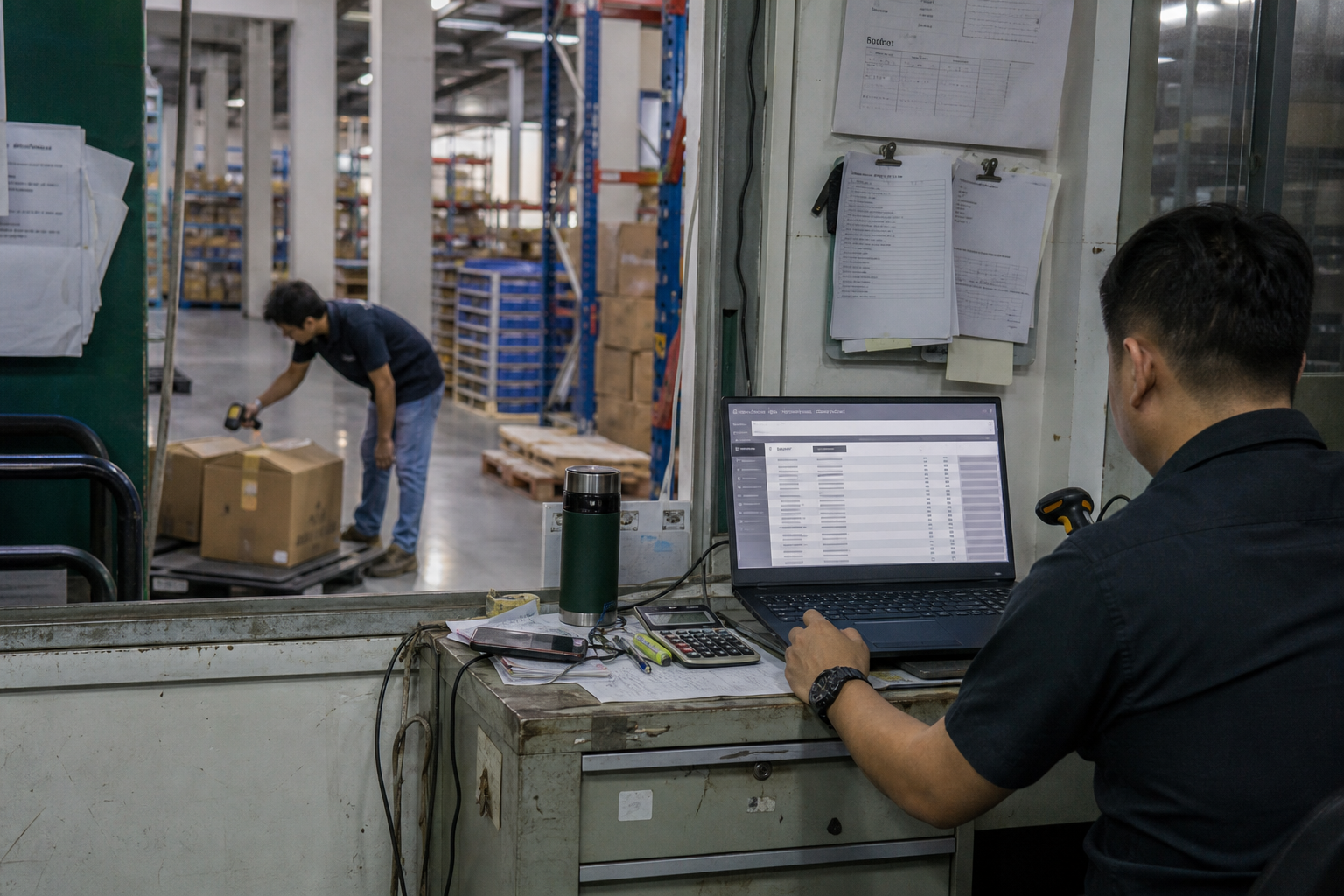
An ERP manages business-wide transactions, financial records and master data. A WMS manages physical inventory states, warehouse locations, operator tasks and execution exceptions. They overlap around orders and inventory, but they solve different operational problems.
| Responsibility | ERP | ODIN WMS |
|---|---|---|
| Financial transactions | Primary system of record | Returns operational confirmations |
| Sales and purchase orders | Creates and records | Converts into executable warehouse work |
| Inventory | Commercial or accounting quantity | Physical status, location and task state |
| Warehouse priorities | Usually represented as order queues | Balances SLA, stock, capacity and cut-offs |
| Operator instructions | Limited or transaction-oriented | Guided receiving, picking and packing tasks |
| Exceptions | Records adjustments after the event | Surfaces issues at the point of work |
The ERP is not failing. The warehouse has simply reached a level of operational complexity that requires a dedicated execution model.
Orders exist in the ERP, but spreadsheets, messages and experience still determine what the floor does next.
The ERP quantity is correct only after adjustments because physical states are not validated where work happens.
Every new channel, SKU or location increases decision load faster than it increases productive warehouse capacity.
Clear architecture before integration.
Usually no. The strongest architecture preserves the ERP as the commercial system of record and adds a WMS for warehouse execution. Replacement is only relevant when the ERP itself no longer serves the wider business.
Ownership should be defined by state. The ERP may own the commercial quantity while ODIN owns physical location and execution status. Agreed events keep those views aligned.
Yes, where suitable APIs or data exchange methods are available. Standard paths and specialised requirements are confirmed during integration discovery.
Review system responsibilities, handoffs and operational blind spots with ODIN.