
For COOs and deployment sponsors

Go live in seven days.
Prove the scope first.

ODIN’s standard programme maps one working floor, configures agreed workflows and integrations, coaches the team and starts controlled production. We confirm eligibility before making the seven-day commitment.

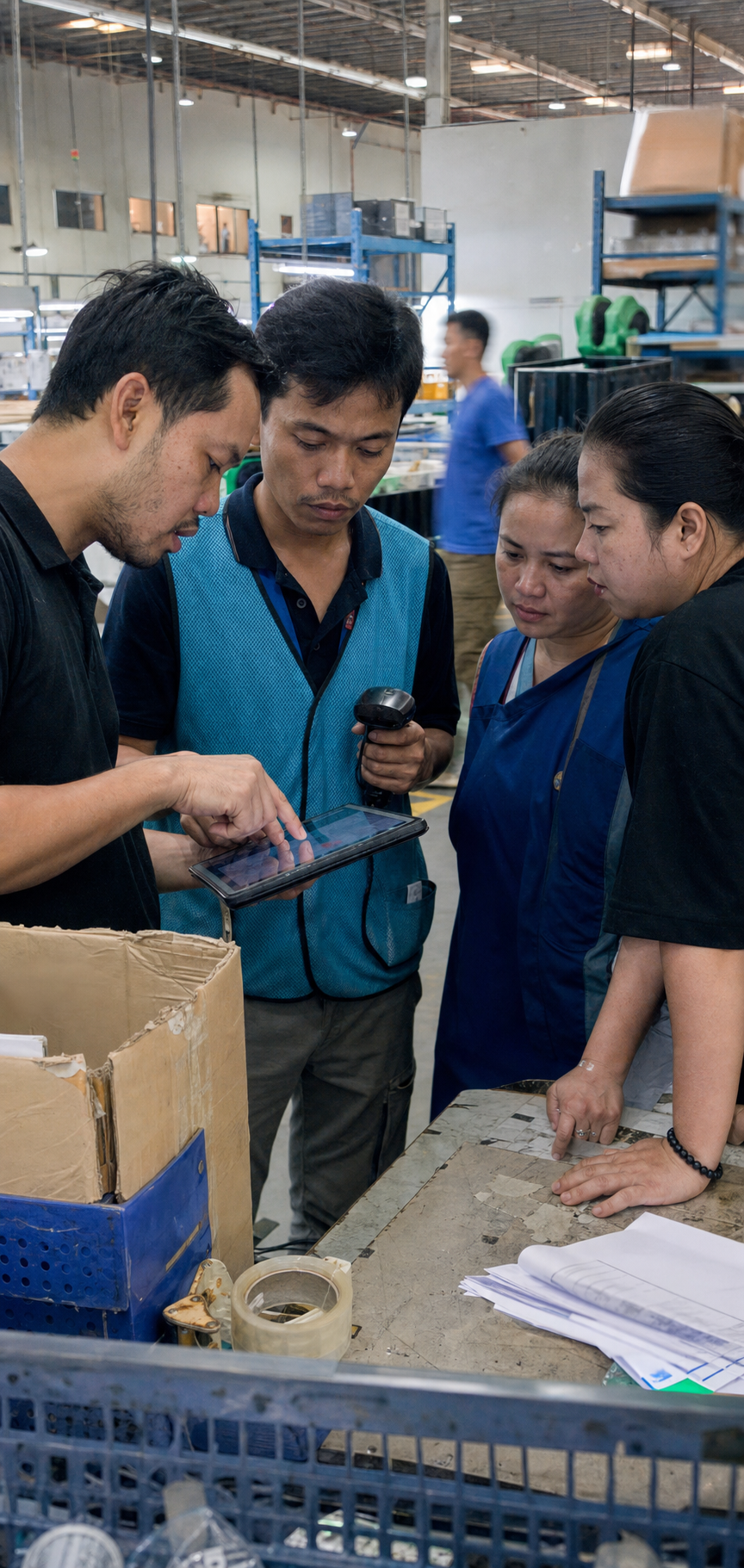
Experienced implementation specialist coaching warehouse operators using a tablet and barcode scanner on the warehouse floor
OPERATIONAL OWNERCOO or deployment sponsorOwns readiness, decisions, risk and measurable adoption.
COMMON FAILUREThe deadline is fixed before the scope is knownCustom rules, missing data and unavailable owners surface after configuration starts.
DECISION TO MAKEIs this a standard deployment?Confirm site, workflows, integrations, data, hardware and decision availability first.

Define “go live” before discussing the date

For a standard ODIN deployment, go-live means the agreed location, users, order streams and warehouse tasks are running in controlled production with trained operators and named support owners.

STANDARD MODEL · TARGET 7 DAYS

Ready for a controlled launch

The core workflow fits ODIN’s proven model and the customer can make decisions during the deployment window.

  • One agreed go-live site or controlled area
  • Representative order and exception examples
  • Clean item, location and user data
  • Available standard hardware
  • Verified standard integration or agreed import path
  • Named sponsor, floor lead and technical owner
EXTENDED SCOPE · PLAN SEPARATELY

More discovery or delivery required

The programme should be extended when risk cannot be removed safely inside the standard window.

  • Multiple sites launching together
  • Unverified legacy or specialised integrations
  • Major layout or hardware changes
  • Complex customer-specific rules
  • Missing, unclean or disputed master data
  • Decision-makers unavailable during deployment
Collect before committing: site count, floor plan, workflow list, integration register, user count, devices, representative transactions, data owner, exception list, acceptance criteria and named decision-makers.

Five stages, each with a visible output

The timeline is a working sequence, not a marketing countdown. Each stage must produce an approved deliverable before the next one is accepted.

  1. 01

    Walk and measure the floor

    Record travel paths, stations, storage limits, queue points and the handoffs that slow or hide work.

  2. 02

    Agree the warehouse rules

    Define stock states, task sequence, user roles, exception owners and the systems updated at each event.

  3. 03

    Load data and connect systems

    Configure locations, items, users, devices and verified integration paths against the approved workflow.

  4. 04

    Run real scenarios with operators

    Test representative receipts, picks, exceptions and dispatches; correct gaps and coach the floor team.

  5. 05

    Release and support production

    Start the agreed scope, monitor work and assign every issue to a named owner during stabilisation.

Operators train before the floor does.

The seven-day promise includes an onboarding programme, not just software. ODIN Academy is our warehouse training game built on the real ODIN screens — pickers and packers learn locations, scanning, expiry (FEFO) and packing rules in six languages, so stage-four rehearsals start with operators who already know the device.

Visit ODIN Academy →

What the customer must provide

Fast delivery requires decisions and access. This is the working checklist for the deployment sponsor.

OPERATIONS OWNER

People and floor access

  • Sponsor and warehouse lead
  • Representative operators
  • Access to live work areas
  • Fast approval of workflow decisions
TECHNICAL OWNER

Systems and data

  • System versions and credentials process
  • Product, location and user data
  • API or file-exchange documentation
  • Security and network decisions
ACCEPTANCE OWNER

Tests and success criteria

  • Representative transactions
  • Known exception scenarios
  • Named acceptance approver
  • Baseline measures and reporting source
DEPLOYMENT SCORECARD · TYPICAL TARGETS

What a deployment is held to

Deployment success is measured on productive use and service stability—not on whether configuration was completed.

TIME TO LIVE SCOPE6–12 weeksSigned scope start through accepted production use, first scope live.
OPERATOR READINESS90%+ independentUsers completing defined tasks without intervention at go-live.
STABILISATION2–4 weeksHypercare to steady state, issues tracked by severity and resolution time.
SERVICE CONTINUITYNo dispatch breakThroughput, accuracy and dispatch protected through the transition.
Collect: signed scope, start and go-live timestamps, acceptance record, user count, training attendance, issue log, severity definitions, first-two-week service measures, scope changes, sponsor quote and operator feedback.

Questions the sponsor should settle

Do not approve the date until these answers have named owners.

What can extend the timeline?

Additional sites, specialised rules, unavailable data, unverified integrations, new hardware, security dependencies or decisions that cannot be made during the working window.

What does operator training include?

Representative users practise the agreed receipt, movement, picking, packing, exception and dispatch scenarios that apply to the launch scope. The acceptance criteria should define what independent task completion means.

What happens after production starts?

The launch team monitors issues, task completion and service measures during stabilisation. Day-eight improvement begins only after the agreed production scope is stable and its baseline is trustworthy.

Find out whether your warehouse fits the seven-day model.

We will review scope, floor readiness, data, systems, hardware and decision ownership before making the commitment.

Check deployment fit →