
Release work against stock and capacity
Admit orders to the floor only when inventory state, priority, cut-off and execution capacity are understood.
For ecommerce fulfilment operations leaders
ODIN gives the operational owner one live view of released demand, sellable stock, floor capacity, exceptions and carrier cut-offs—so the shift knows what must move now, what is at risk and who owns recovery.
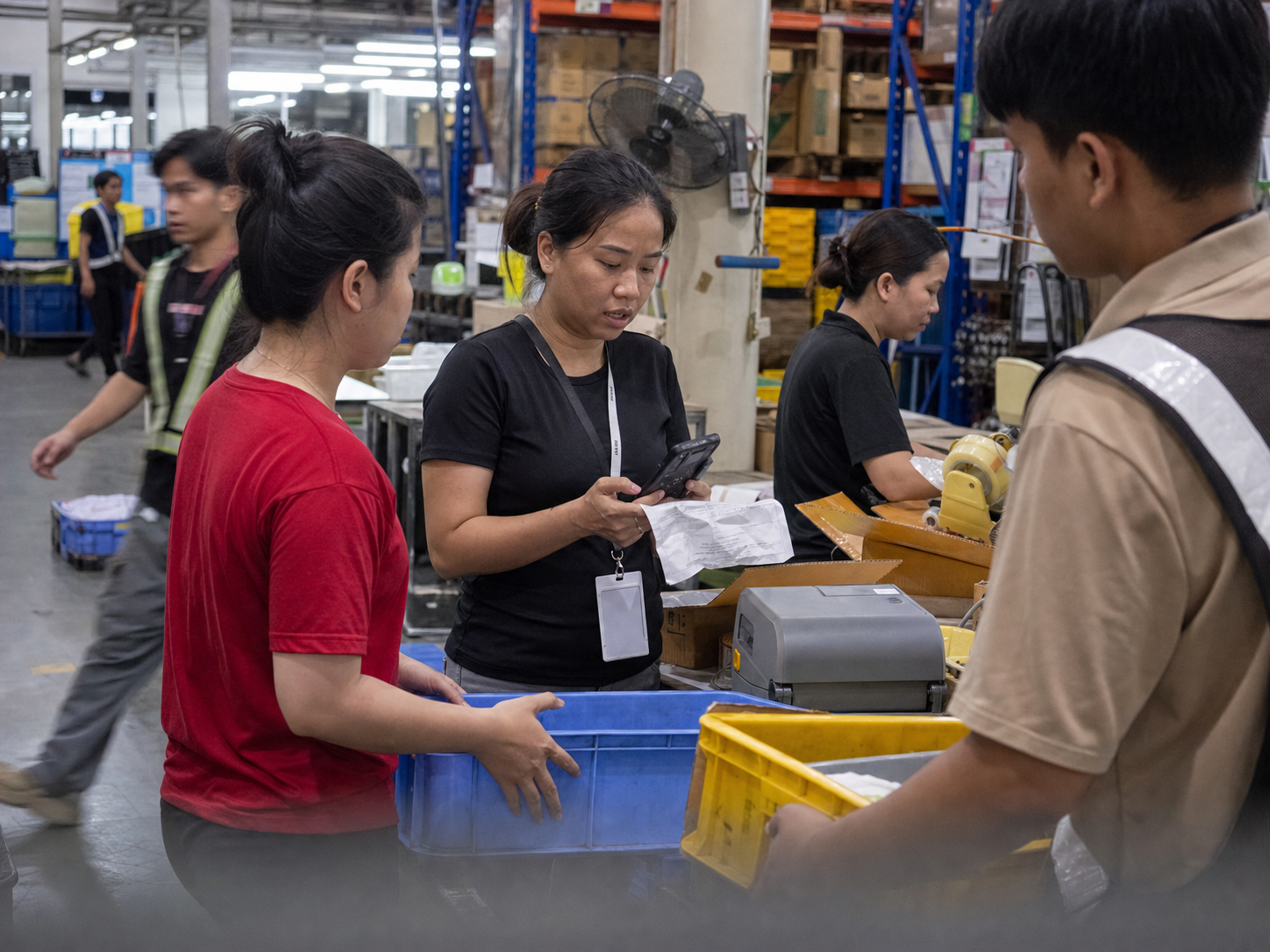
The operational owner needs more than a list of orders. ODIN sequences authorised work using service deadline, sellable stock, exception state and remaining floor capacity.
Move decisions out of channel dashboards, chat messages and spreadsheets into a governed execution flow with clear ownership.
Admit orders to the floor only when inventory state, priority, cut-off and execution capacity are understood.
Give each operator one task with the location, item, quantity and required validation—without supervisors re-sorting lists.
Surface stalled picks, stock conflicts, cancellations and carrier risk early enough to reassign work or reset the promise.
Targets a well-run guided operation holds itself to. Your baseline and order mix set the exact numbers.
No. Shopee, TikTok Shop, Lazada and Shopify continue accepting customer orders. ODIN connects those ecommerce channels to warehouse execution, combines authorised order data in one fulfilment queue and returns inventory and fulfilment status through the configured integration.
Yes. ODIN can support shared inventory across ecommerce, retail and wholesale channels when stock ownership, reservation rules, update frequency and service priorities are defined. This gives the warehouse one operational view while each sales channel receives the appropriate available-to-sell inventory status.
ODIN sequences authorised warehouse work using promised service level, sellable stock, exception state, carrier cut-off and remaining floor capacity. The operational owner sees which orders are at risk, why they are blocked and where recovery action is required before the SLA is missed.
Track overselling, cancelled orders, missing or damaged stock, partial fulfilment, picking and packing errors, stalled orders, late carrier handover and work that repeatedly needs manager intervention. These records reveal where inventory control or warehouse workflows are causing avoidable delay and cost.
Yes. ODIN can connect with established ERP and accounting platforms, ecommerce marketplaces, storefronts and courier services through standard APIs and scoped integrations. Implementation defines which system owns orders, inventory, financial records and fulfilment events before data is exchanged.
See where promises, capacity, stock and cut-offs fall out of alignment—and what the floor should control first.