
In production · measured results publishing with customer approval
Book + event distribution
Execution at catalogue scale.
Without depending on memory.
Big Bad Wolf runs some of the world's largest book sale events — millions of books, round-the-clock peaks and temporary sites that have to operate like permanent warehouses. ODIN runs the execution layer underneath: ISBN-level identification, guided picking and event workflows that newly hired operators learn in days.
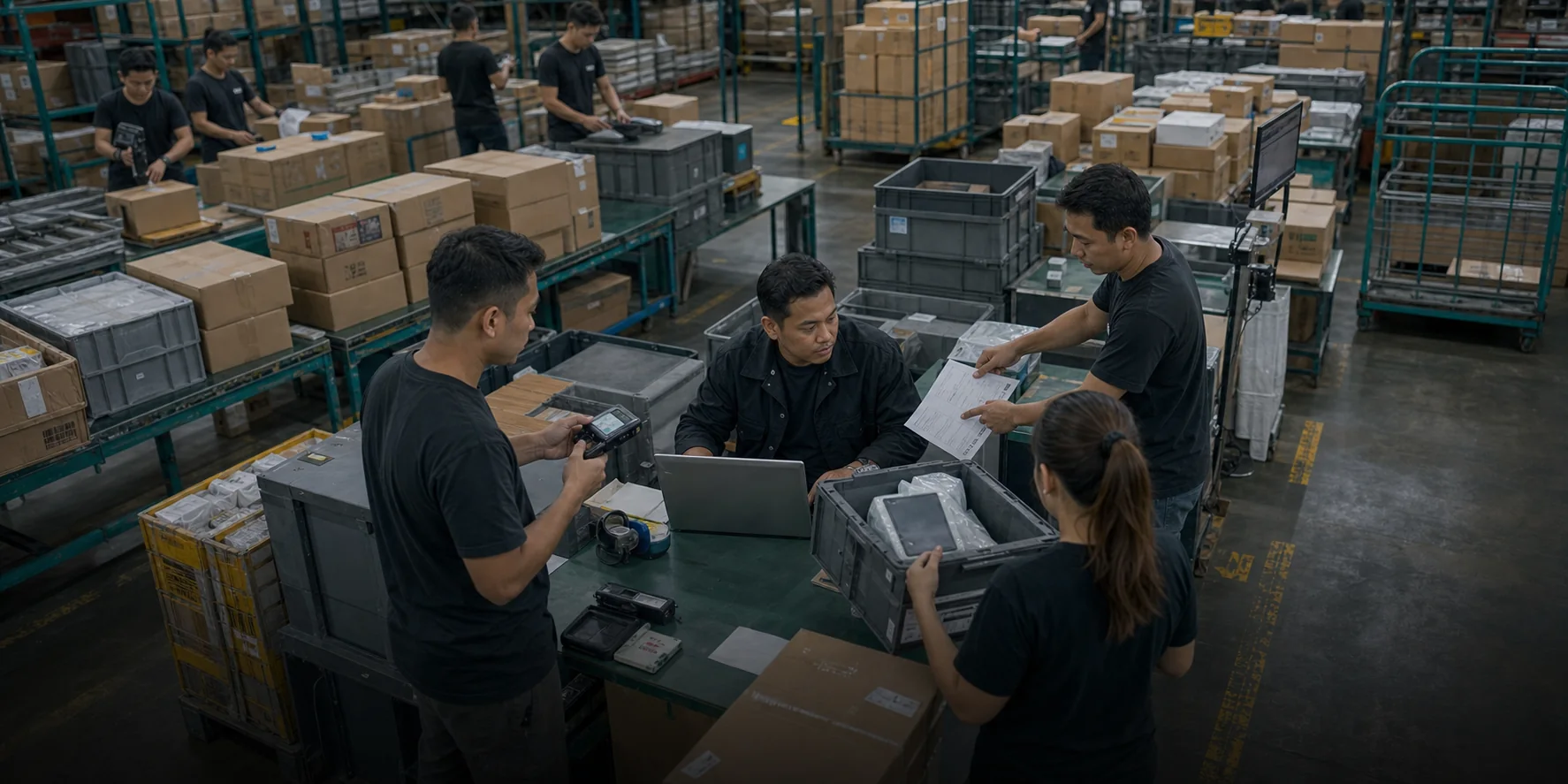
Inside the deployment
1. Operating context
Big Bad Wolf buys books at enormous scale and sells them through high-volume public sale events across Southeast Asia, alongside ongoing distribution. The assortment changes from event to event, every title is its own ISBN, and the workforce expands rapidly with temporary hires at each peak. A temporary event site has to reach warehouse-grade execution within days of setup.
2. The constraint before ODIN
At this catalogue scale, no operator can memorise titles or locations. Execution that depends on experienced staff, printed lists and floor knowledge sets a hard ceiling: onboarding is slow, work can only be assigned to people who already know the layout, and errors surface late — at packing, or after the customer has the order — instead of at the moment they happen.
3. What ODIN changed
ODIN made identity and location a system property instead of a people property. Every book resolves by ISBN scan; every task tells the operator where to go and what to confirm; picking and packing run as guided handheld workflows; and event sites activate from configuration templates so a temporary operation starts with the same rules as the permanent warehouse. Discrepancies are captured at scan time and routed as exceptions rather than discovered downstream.
4. What that means in operation
Work is assignable to anyone from their first shift, because the device — not tenure — carries the knowledge. Supervisors see live progress and exception load across the floor instead of reconstructing it afterwards. Peak events run on process rather than heroics. Like-for-like measured comparisons — throughput per worker, pick accuracy, event setup time — publish here once customer validation and approval are complete.
5. Customer voice
Approved quotes from operations leadership and floor operators publish together with the measured results. The consistent internal theme: control at peak volume without adding supervision.
6. Methodology
Every throughput figure published here will state whether it measures orders, lines, units or scans, alongside worker count, shift length, order mix and peak conditions — so you can judge whether the result transfers to your operation.
Want the detail behind this deployment?
Tell us your warehouse type, workforce and primary constraint. We will arrange the most relevant approved reference available.